LIBE 467 - Assignment 1: Evaluation of a Reference Work
LIBE 467 Assignment 1: Evaluation of a Reference Work
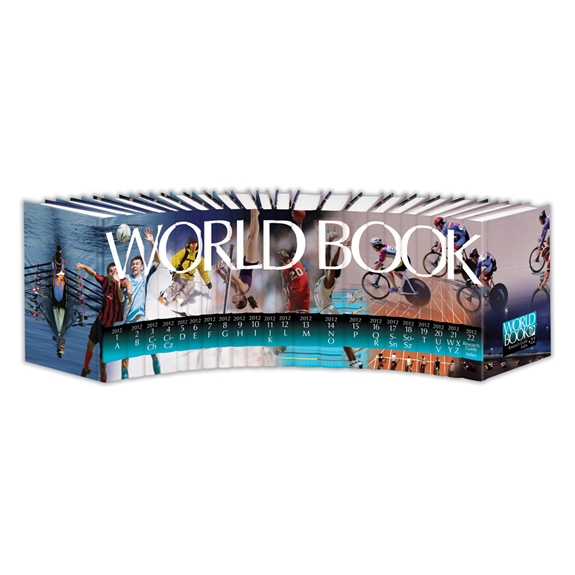
Part 1: Old Resource Review - The World Book encyclopedia set, 2012
The encyclopedia set that is currently housed in the library resource area is a 2012 World Book encyclopedia. While this may seem like a fairly recent publication, 2012 was 8 years ago, and much of the content will be outdated. At the very least it does not contain new entries of major events that have happened in the 8 years since publication (e.g. the Covid-19 pandemic).
The following rubric contains questions that will help to evaluate the relevance of this resource to our school and our students.
(Created using “How Do You Know If It’s Good? -- The Evaluation Process”, Reidling, 2019, p. 23)
Purpose & Relevancy
The purpose of The World Book encyclopedia is to “educate and inform” (Reidling, 2019, p. 66) and it’s content scope is varied and diverse with over tens of thousands of entries on many areas of interest in each set (World Book, Inc., n.d.). “Through detailed articles and brief facts, encyclopedias include a wide range of information from a multitude of topics” (Reidling, 2019, p. 66) and are useful to staff and students in their search for both academic and personal interest information. A large portion of the information that students and staff are looking for would have an entry in the encyclopedia. While it does not contain a large amount of information on each topic, and will need other sources to support any research projects, it provides students with background knowledge, preresearch information, and quick fact answers (Reidling, 2019).
The information contained in The World Book encyclopedia is not unique. It contains various topics and is connected to many of the other resources in the library, however, “these reference sources are unique in that they are organized and packaged in such a way that information is easily accessible and retrievable by the user” (Reidling, 2019, p. 66). The information is presented in topic entries in alphabetical order, using that topic as the heading of the entry, and the set contains an entire index book to help guide research and locate information. While students are able to access this information online from other sites, waiting for the computers to boot up and then digging through all the answers returned by the internet search engine would take more time than just turning to the page that contains the entry in the physical copy.
The World Book encyclopedia was first published in 1917 (World Book, Inc., 2012), and has published sets of encyclopedias each year since. In regards to authority and accuracy, it contains 38 pages of contributors and consultants (all with letters after their names), and states that “each edition reflects up-to-date information and the latest changes in educational viewpoints. Every subject area is under continuing surveillance… Thousands of pages are revised or updated each year” (World Book, Inc., 2012). It is both an accurate and authoritative resource to provide students with answers that they seek.
Currency
Unfortunately, the currency of this encyclopedia set is in question. As with any physical copy of a reference source, some of its information is outdated by the time it reaches the students, but being from 2012, much of its information will be old (though some still useful historically). However, like was mentioned above, it will be missing entries on the major events and people from the following 8 years after its publication and, therefore, is missing information on topics relevant to our staff and students.
The 2012 encyclopedia set could contain cultural biases or entries that could be deemed racist if printed today, however, much of what is printed in the set is factual information that has been edited and reviewed by many other scholars and does not contain opinions. This information is still presented through a cultural lens which dictates what is included as entry headings and what information is included in those entries; for example, many of the entries refer to the United States as the encyclopedia is printed in the USA.
Curricular connections
The World Book encyclopedia set supports many of the curricular competencies in the English language arts, social studies and science curriculum, as well as some curricular content in those areas (Government of British Columbia, 2016). Through an inquiry project and the use of The World Book encyclopedia set, students are also working on the core competencies that overarch all of the new curriculum, so it supports work in those areas as well. The encyclopedia set also supports the practice of information literacy skills, and critical and creative literacies as students use the information found in the encyclopedias to corroborate other sources of information.
Efficient use of library space
Another drawback to this reference resource is the space it takes up on the shelves. 22 books takes up a lot of real estate in the stacks, especially in smaller libraries where there isn’t a proper space for a reference section. Reference sections are mostly placed in areas where students can’t immediately see them as they are not items that students reach for daily. The World Book encyclopedia is available online in a digital database, which has many benefits, however, having a physical copy for students to access immediately and practice encyclopedia use has benefits as well. Though, I don’t think an up-to-date physical copy is necessary if you have the online subscription.
Part 2: New Resource Review - The World Book Online Annual Subscription
As this is just the online version of The World Book encyclopedia, it has the same purpose and relevance to our students and staff. It provides detail on many topics of interest and supports the curriculum in much the same way. It also has the same authority, accuracy and objectivity of the physical copy. There are, however, a few differences that make it superior to the 2012 World Book encyclopedia.
The first major difference between The World Book Online annual subscription and the physical copy is currency. Not only is the online version more current than 2012, articles are able to be added at any time of the year, not just before the printing and publication date. The online database “is a premier online reference source containing every article from the print set plus thousands more, with state-of-the-art multimedia and editor-reviewed Web sites” (Reidling, 2019, p. 70).
With this subscription, students also get access to the Early World of Learning database up to the World Book Advanced database (World Book, n.d.), as well as the ability to translate entries to multiple languages to support ELL students. The subscription also comes with training and support, graphic organizers, webquests, and the ability to interface with Google Classroom.
Another major difference is the efficient use of library space and the access that The World Book Online provides. As this online subscription does not take up space on the shelves, that area can be filled with other reference resources or books, however, now the reference section requires computers to provide access. Unfortunately, the computers in the library are very slow and take up a lot of space within the library, replacing these with an ipad to access the databases would make access simple and free up space for other uses. With 24/7 availability, every student is able to use The World Book Online subscription in the library, at home, and in their classrooms at any given time, so the reach and accessibility provided by the subscription is very large compared to a single physical set.
Unfortunately, after speaking to two representatives, leaving a message for a third and emailing another, I have yet to get a rough quote for The World Book Online annual subscription. Hopefully, someone will contact me eventually with the pricing on this subscription. The physical set of the 2021 World Book encyclopedias is $999 USD, so it would be interesting to see what the cost of the annual subscription is. Would it be less per school than one set of books because you need to renew the subscription each year, or would it be the same because they assume that you would also buy the new set each year?
References
Government of British Columbia. (June, 2016). BC’s New Curriculum. Retrieved from https://curriculum.gov.bc.ca/
Riedling, A. & Houston, C. (2019). Reference Skills for the School Librarian: Tools and Tips (4th ed.) Libraries Unlimited.
World Book, Inc. (2012). The World Book encyclopedia. Chicago, IL: World Book, Inc.
World Book. (n.d.). World Book Online Annual Subscription. Retrieved from https://www.worldbook.com/World-Book-Online
World Book (n.d.). World Book encyclopedia 2012. Retrieved from https://www.worldbook.com/world-book-encyclopedia-2012.aspx


Thank you for sharing your thoughts. I get caught up in the idea that 2012 was not that long ago all the time. I notice it most when I am looking at books and articles and see that they were published in 2010 or somewhere around then. At first I do not consider this and then when I actually start thinking about it, it is a long time ago! You are right, so much happens in that span of time and we need our resources, and the information students are reading, to reflect those developments.
ReplyDeleteI also think World Book Encyclopedias are ubiquitous within schools and classrooms. Although, I cannot remember when I have actually used one in teaching or referred a student to one when they are doing research. I would be much more inclined to use World Book Online and send students to that as a resource. I actually recently learned than my school district has a subscription to World Book Online and have had the chance to explore a few of their databases. They are fantastic! I am especially interested in the World Book Kids database, as that is my teaching level. I find it interesting, easy to use, and student-friendly.
Hi Lisa. I am going to reply here because as I was reading your comment I wanted to jump in to say that as a High School Teacher I use World Book Encyclopedia with my grade 8 and 9 students (mostly) as a starting point. Although I do value the online version immensely, I will have my students use the physical copy of the encyclopedia first! I think there is such beauty in the experience of using print resources and I want my students to see how wonderful print books can be. From there, we use mostly digital resources as that seems to be what they are most attracted to and because of cost, digital resources are usually most current.
DeleteI also agree with Brittany in that the online subscription seems to best when space is an issue. Luckily in our school library we do space for the physical collection, but that is only because our TL weeded quite a few of our other collections. I really love World Book and that is actually the resource I chose for my assignment as well.
The online subscription seems like a great alternative to the World Book print editions. I agree that for a small library (I have one as well), having twenty-two large books does not seem to be the best use of space. I am interested as well what the cost would be. Perhaps you could comment on the price at a later date if you ever hear back? I am also curious if you looked at any other online encyclopedias as well.
ReplyDeleteI was wondering if your school already had access to ipads since you said the computers in your library are slow and take up a lot of the space. Would you have to factor the ipad cost into your library budget or would that be more of a school cost where the ipads would be used more for classroom use rather than kept just for library use?
I haven't heard back, apparently a rough quote isn't what they are looking for. However, I did find out that ERAC has a database subscription that costs $1.75 per student and World Book Online is part of that subscription! Not too bad depending on the size of your school!
DeleteThe school has a few ipads but they are mostly signed out to teachers. I would try to request one of those for library use, but if not, perhaps the PAC would purchase one for the library.