LLED 462 - Learning Log 2, module 4 (Assigment 1)
TL Captain's Blog. Stardate 2020.276.
A video resource that I found and loved two years ago is the National Geographic Human Footprint video/dvd and interactive map that supports it. My grade 9 students were in awe of how much we use throughout our lives and how much waste is created. We really enjoyed watching the video and playing with the map, but I want to take it further next year!
The following collection of materials ties into human impacts on sources and sinks (e.g., climate change) from the Science 9 curriculum, as well as many multiliteracies.
After watching the video and exploring the interactive map, I want students to explore their human footprint, how they impact the environment and our role in climate change. At this point, students will become what Serafini calls, "Reader as Navigator" (2012, p. 28) as we explore varied multimodal texts. I will provide some books for students to read on their own, and some that we will read as a class to further explore some of these themes. I found a few examples of graphic novels, picture books, games, and websites (listed below) that I would have the students navigate to gain more of a sense of our impacts. To start our project, the students would pick a few simple, everyday items that they buy and use up around the house, which will become the topic for their research and final project.
Students, with my guidance and scaffolding, will set about searching their selected product: how it is made, where it comes from, the environmental costs of production and transportation, and where it goes when it is used up. Overall, they will try to determine how that item has impacted the environment and contributed to climate change. While students would be "decoding written language, [they also] must learn to navigate the design of print-based and digital texts, including the left to right orientation of English language texts, and understand the role that charts, graphs, diagrams, visual images, fonts, design elements, and illustrations encountered in picture books, informational texts, graphic novels, websites, and advertisements play as [they] construct meaning in transaction with these multimodal texts" (Serafini, 2012, p. 28).
Their final product will have students becoming "Reader as Designer" (Serafini, 2012, p. 28) as they show the journey of the product and its impacts along the way. It can take any form they choose: graphic novel (I was so inspired by Miller's article "The surprising benefits of student-created graphic novels" that I hope many students choose this option!), audiobook (Milton and Oakley gave me the courage to offer this as an option, as it doesn't seem to hard for me or the students to learn), powerpoint, prezi, blog, movie, picturebook, etc. There will be quite a bit of extra learning of technology for both me and the students depending on their final project format, but this just adds to the multiliteracies being explored and reinforced. "Not only do readers construct meaning during their transactions with multimodal texts, they construct the actual texts to be read and interpreted" (Serafini, 2012, p. 29) as they share their final projects and learnings with their classmates.
My hope is that students will be more aware of the impacts of a simple item that they take for granted, but that they will also expands their multiliteracies as they complete the project.
Main Resource:
National Geographic Human Footprint dvd and interactive map

Trashed: A Graphic Novel, by Derf Backderf (for teens)

World Without Fish, by Mark Kurlansky, illustrations by Frank Stockton

I'm not a plastic bag : a graphic novel, by Rachel Hope Allison, Jeff Corwin
Picture/Nonfiction Books:
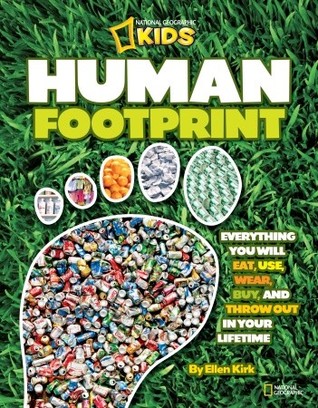
Human Footprint: Everything You Will Eat, Use, Wear, Buy, and Throw Out in Your Lifetime by Ellen Kirk

One Plastic Bag: Isatou Ceesay and The Recycling Woman of Gambia, by Miranda Paul

What a Waste: Trash, Recycling, and Protecting our Planet, by Jess French
Websites for further research and activities:
Interactive maps: https://www.smithsonianmag.com/science-nature/see-how-humans-have-reshaped-globe-interactive-atlas-180952971/ (mentions British Columbia for logging, and when you zoom in on the map it shows Vancouver Island specifically! So cool/not cool!)
Kahoot: https://www.nationalgeographic.org/interactive/human-impacts-environment/
Games: https://app.legendsoflearning.com/teachers/games/learning-objective/375, https://app.legendsoflearning.com/teachers/games/learning-objective/377/game/1369
References
Miller, Shveta. (July 21, 2019). "The surprising benefits of student-created graphic novels." Cult of Pedagogy. Retrieved from: https://www.cultofpedagogy.com/student-graphic-novels/
Milton, Marion (ed.) & Oakley, G. (2017). Engaging students in inclusive literacy learning with technology. Inclusive Principles and Practices in Literacy Education, Emerald Publishing Limited. (pp. 159-176).
Serafini, F. (2012) Reading multimodal texts in the 21st century. Research in Schools. 19(1), 26-32.


Comments
Post a Comment